


Attic Mold Removal Expert Solutions for a Healthy Home
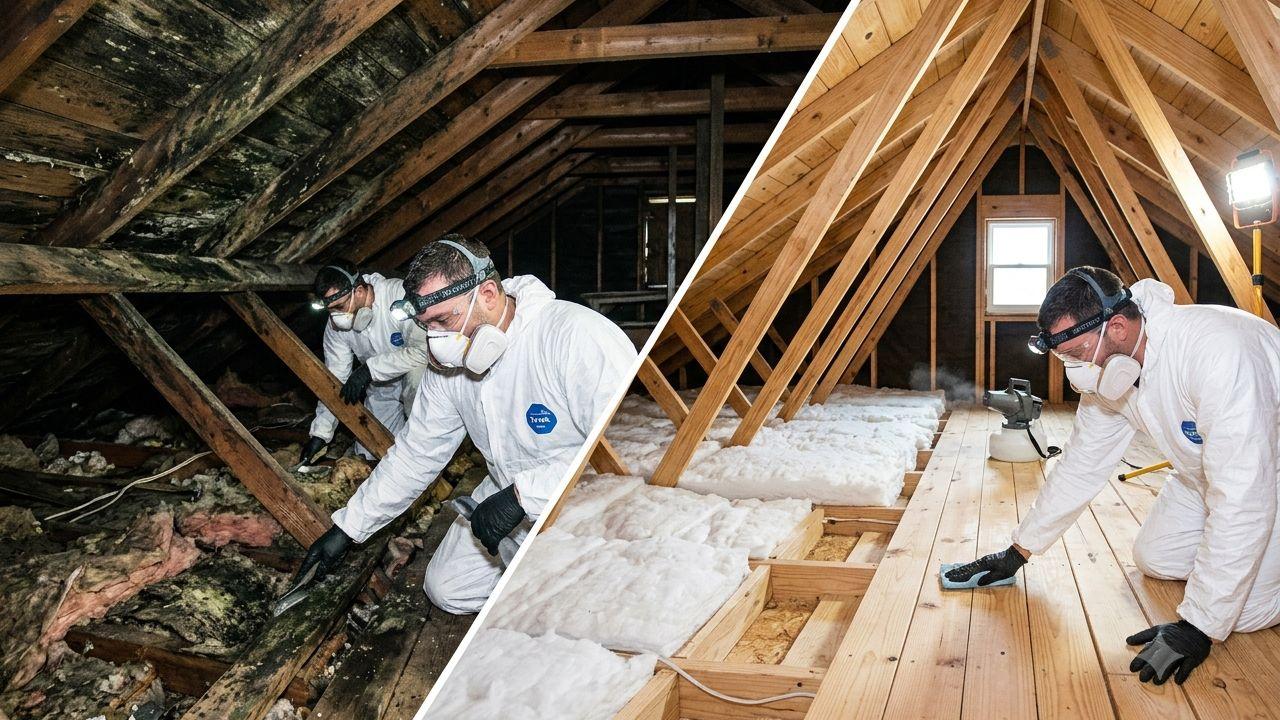
Many homeowners rarely visit their attic, making it one of the most overlooked areas of a house. Unfortunately, this hidden space is highly vulnerable to mold growth due to poor ventilation, moisture buildup, and roof leaks. Left untreated, mold can spread quickly, damage wooden structures, reduce indoor air quality, and even affect your family's health.
Attic mold removal is the process of identifying, removing, and preventing mold growth in attic spaces using safe and effective methods. Professional removal not only eliminates existing mold but also addresses the underlying causes to prevent future infestations.
In this guide, you'll learn what attic mold removal involves, what causes attic mold, why professional services matter, and how to keep your attic mold-free for years to come.
What Is Attic Mold Removal
Attic mold removal is a specialized cleaning and remediation process designed to eliminate mold colonies from attic surfaces such as wood framing, roof sheathing, insulation, and other structural materials.
The process typically includes:
- Complete attic inspection
- Moisture source identification
- Safe mold containment
- Mold removal using approved techniques
- Surface cleaning and treatment
- Preventive recommendations to stop mold from returning
Professional technicians also inspect ventilation systems, insulation, and roofing components to ensure the environment remains dry after the cleanup.
What Causes Mold in the Attic
Understanding the root cause of mold is essential before beginning attic mold removal. Simply cleaning the visible mold without fixing the moisture problem often results in mold returning.
Common causes include:
Poor Ventilation
When warm indoor air becomes trapped inside the attic, condensation forms on wooden surfaces. This excess moisture creates ideal conditions for mold growth.
Roof Leaks
Damaged shingles, flashing, or roof vents allow rainwater to enter the attic. Even small leaks can support mold growth over time.
Bathroom and Kitchen Exhaust Fans
Improperly vented exhaust fans that release humid air into the attic instead of outside significantly increase moisture levels.
Inadequate Insulation
Poor insulation allows warm household air to rise into the attic, causing condensation during colder months.
High Indoor Humidity
Homes with consistently high humidity often experience moisture accumulation in attic spaces, especially during seasonal weather changes.
Signs You Need Attic Mold Removal
Many homeowners don't realize mold is present until it has spread extensively.
Watch for these warning signs:
- Musty or damp odors
- Dark stains on attic wood
- White, green, or black mold patches
- Water stains on roof decking
- Condensation on nails or rafters
- Increased allergy symptoms indoors
- Visible moisture after rainfall
Early detection reduces repair costs and limits structural damage.
Why Professional Attic Mold Removal Is Important
While some homeowners attempt DIY cleaning, mold often extends deeper than what is visible. Professional attic mold removal provides a more complete and lasting solution.
Safe Mold Removal
Professionals use protective equipment and containment systems that prevent mold spores from spreading throughout the home.
Complete Inspection
Experts identify hidden mold behind insulation and inside structural components.
Moisture Control
Without correcting the moisture source, mold usually returns. Professionals address ventilation, leaks, and humidity issues during the removal process.
Protects Structural Integrity
Mold weakens wooden framing and roof decking over time. Removing it early helps preserve your home's structural strength.
Improves Indoor Air Quality
Although attic mold is hidden, airborne spores can travel through ventilation systems and affect indoor air quality throughout the house.
The Attic Mold Removal Process
Professional attic mold removal generally follows several important steps.
Step 1 Inspection
Technicians inspect the attic to determine mold growth, moisture levels, ventilation issues, and affected materials.
Step 2 Containment
The work area is isolated to prevent mold spores from spreading into living spaces.
Step 3 Mold Removal
Specialized cleaning agents, HEPA vacuums, wire brushing, and approved remediation methods remove mold from affected surfaces.
Step 4 Surface Treatment
Antimicrobial treatments help eliminate remaining spores while reducing future mold growth.
Step 5 Moisture Correction
Roof leaks, ventilation problems, insulation deficiencies, or humidity issues are corrected to prevent recurrence.
Step 6 Final Inspection
After cleanup, technicians inspect the attic to verify successful mold removal and ensure moisture levels are under control.
Can You Remove Attic Mold Yourself
Small surface stains may seem manageable, but DIY mold removal has several risks.
Homeowners often:
- Disturb mold spores
- Miss hidden mold colonies
- Fail to eliminate moisture sources
- Use ineffective cleaning products
- Spread contamination into other rooms
Professional attic mold removal is recommended whenever mold covers a large area, returns repeatedly, or involves structural materials.
How to Prevent Future Attic Mold
Preventing mold is far less expensive than repairing extensive damage.
Follow these maintenance tips:
Improve Ventilation
Ensure attic intake and exhaust vents provide proper airflow throughout the year.
Repair Roof Damage Quickly
Inspect your roof regularly and repair damaged shingles, flashing, or vents immediately.
Vent Exhaust Fans Outside
Bathroom and kitchen exhaust fans should discharge outdoors rather than into the attic.
Control Indoor Humidity
Maintain indoor humidity between 30 and 50 percent using ventilation or dehumidifiers if necessary.
Check Insulation
Proper insulation helps prevent condensation caused by temperature differences.
Schedule Annual Inspections
Routine attic inspections help detect moisture issues before mold develops.
Health Risks Associated with Attic Mold
Although attic mold is often hidden, it can still affect indoor air quality and occupant health.
Exposure may contribute to:
- Sneezing
- Nasal congestion
- Persistent coughing
- Eye irritation
- Skin irritation
- Headaches
- Worsening asthma symptoms
- Respiratory discomfort
Individuals with allergies, asthma, weakened immune systems, or chronic respiratory conditions may experience more severe reactions.
Benefits of Timely Attic Mold Removal
Prompt attic mold removal offers several long-term advantages.
These include:
- Improved indoor air quality
- Healthier living environment
- Protection of wooden structures
- Reduced repair expenses
- Increased home value
- Better energy efficiency
- Prevention of recurring mold problems
- Greater peace of mind
Taking action early minimizes damage while protecting your investment.
Choosing the Right Attic Mold Removal Company
Selecting an experienced contractor ensures effective remediation and long-lasting results.
Look for companies that:
- Have certified mold remediation professionals
- Perform thorough attic inspections
- Explain the removal process clearly
- Address moisture sources
- Use professional-grade equipment
- Offer transparent pricing
- Provide written reports and recommendations
- Have positive customer reviews
Hiring qualified professionals helps ensure the mold problem is resolved properly the first time.
Conclusion
Attic mold often develops silently, but its effects can become expensive and hazardous if ignored. Moisture problems, poor ventilation, and roof leaks create ideal conditions for mold growth, making regular inspections essential for every homeowner.
Professional attic mold removal goes beyond cleaning visible mold by identifying moisture sources, improving ventilation, and preventing future outbreaks. Whether you've noticed musty odors, visible stains, or signs of excess moisture, acting quickly can protect your home's structure, improve indoor air quality, and create a healthier living environment.
By investing in proper attic mold removal and preventive maintenance, homeowners can avoid costly repairs while ensuring their homes remain safe, dry, and mold-free for years to come.

 English
 Arabic
 French
 Spanish
 Portuguese
 Deutsch
 Turkish
 Dutch
Dutch
 Italiano
 Romaian
 Portuguese (Brazil)
 Greek
Greek
