


X Ray Baggage Scanner: A Guide to MHA and BCAS Approval Requirements
Security screening is an essential part of protecting airports, government buildings, railway stations, commercial establishments, and other sensitive facilities. As security requirements become more specialised, organisations need inspection equipment that supports reliable baggage screening while meeting the technical and regulatory requirements applicable to their operations.
An x ray baggage scanner allows security personnel to examine the contents of luggage, bags, and parcels without routinely opening each item. Depending on the configuration, these systems can offer high-resolution imaging, dual-view inspection, material discrimination, and software-assisted image analysis.
However, selecting the right equipment involves more than comparing technical specifications. Buyers must also understand the relevant approval requirements, identify the intended application, and verify that the proposed scanner is suitable for the installation.
For organisations evaluating MHA approved baggage scanners or BCAS approved baggage scanners, understanding these considerations can help simplify the procurement process and support informed purchasing decisions.
What Is an X-Ray Baggage Scanner?
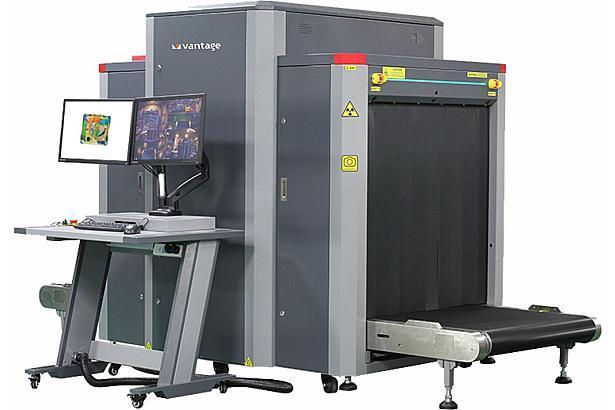
An X-ray baggage scanner is a non-intrusive inspection system that uses X-ray radiation to create images of objects inside luggage, bags, and parcels. Security personnel analyse the resulting images to identify suspicious objects and determine whether additional inspection is necessary.
A typical system includes an X-ray generator, detector assembly, conveyor belt, image-processing software, and an operator workstation. Depending on the model, additional features may include dual-view imaging, enhanced material discrimination, automated image-analysis functions, and network connectivity.
These systems are commonly used in:
-
Airports and aviation facilities
-
Government offices and administrative buildings
-
Railway and metro stations
-
Hotels, shopping centres, and corporate offices
-
Industrial facilities and critical infrastructure
-
Selected customs, parcel, and logistics environments
The appropriate configuration depends on the size of the objects being inspected, expected screening volume, available installation space, security procedures, and applicable technical requirements.
Understanding MHA Approved Baggage Scanners
The Ministry of Home Affairs (MHA), Government of India, has responsibilities across several internal-security and police-modernisation functions. Its published material includes technical requirements and equipment-related documentation for certain security applications.
When buyers search for MHA approved baggage scanners, they should first establish the exact procurement requirement behind that terminology.
Depending on the purchasing organisation and application, the relevant documentation may concern technical specifications, approved qualitative requirements, procurement conditions, or other applicable authorisations. These are not automatically equivalent to a universal product approval covering every scanner.
What should buyers verify?
1. Applicable technical requirements
Review the tender documents or purchasing authority's specifications to understand the required tunnel dimensions, image quality, penetration performance, conveyor characteristics, safety provisions, and other technical parameters.
2. Product and model identification
Verify the manufacturer, exact model designation, configuration, and supporting documentation. Do not rely solely on a generic statement that a product is government approved.
3. Documentary evidence
Request the relevant certificates, approval letters, test reports, declarations, and supporting technical documents required by the purchasing authority.
4. Intended application
A scanner intended for one security environment may not automatically satisfy the requirements of another. Confirm that the proposed equipment matches the location, operational purpose, and procurement conditions.
Organisations can explore MHA and BCAS approved baggage scanner solutions from Krystalvision and request documentation relevant to their specific requirements.
What Are BCAS Approved Baggage Scanners?
The Bureau of Civil Aviation Security (BCAS) is India's aviation-security regulator. It establishes and oversees applicable aviation-security requirements, including those relevant to airport screening arrangements.
BCAS-related requirements are particularly important when selecting equipment for aviation-security applications. Depending on the installation, the purchasing organisation may need to consider equipment specifications, applicable screening standards, testing or certification requirements, and the relevant airport or aviation authority's procurement conditions.
The term BCAS approved baggage scanners should therefore be evaluated against the exact model, intended use, and applicable regulatory or procurement requirement.
Important considerations for aviation buyers
Equipment suitability: Confirm whether the scanner is intended for cabin baggage, checked baggage, oversized items, or another inspection application.
Applicable screening standard: Establish which technical standard or performance requirement applies to the proposed installation. Requirements can differ by screening stage and system type.
Evidence of compliance: Obtain the documentation requested by the relevant authority or tender, and verify its validity and scope.
Installation and integration: Check that the proposed equipment can be incorporated into the required checkpoint or baggage-handling workflow.
Maintenance and operational support: Evaluate service availability, preventive maintenance, spare parts, software support, and operator training.
BCAS-related requirements can change as aviation-security technology and operating procedures evolve. Buyers should confirm the current requirements directly with the relevant authority and procurement documentation rather than relying exclusively on a product description or an older certificate.
MHA vs. BCAS Requirements: What Is the Difference?
MHA and BCAS have different responsibilities, and their requirements should not be treated as interchangeable.
| Consideration | MHA-related procurement | BCAS-related procurement |
|---|---|---|
| Primary context | Relevant internal-security and government procurement applications | Civil aviation security |
| Main reference point | Applicable technical specifications, procurement conditions, and authorisations | Applicable aviation-security requirements and equipment specifications |
| Key verification | Confirm the exact requirement and documentation requested by the purchasing organisation | Confirm the applicable screening requirement and evidence for the intended aviation installation |
| Equipment suitability | Depends on the intended security application | Depends on the screening stage, operational requirements, and applicable aviation standards |
An organisation should determine which requirements apply to its specific project before placing an order. Where a tender requires compliance with multiple specifications or approvals, the supplier should provide evidence addressing each applicable requirement.
Key Features to Evaluate When Buying an X-Ray Baggage Scanner
Approval documentation is important, but buyers must also determine whether the equipment will perform effectively in the intended environment.
1. Tunnel size and baggage dimensions
The tunnel opening must accommodate the expected baggage sizes. Small checkpoints may use compact scanners, whereas facilities handling large suitcases, oversized luggage, or bulky parcels may need larger systems.
Evaluate the maximum baggage dimensions, conveyor height, loading arrangements, and space available for installation.
2. Image quality and inspection performance
Clear images help trained operators examine objects and identify areas requiring further inspection. Relevant parameters include spatial resolution, penetration capability, image processing, and material discrimination where available.
Ask suppliers to demonstrate performance using representative test objects and realistic baggage arrangements.
3. Single-view and dual-view imaging
A single-view scanner generates an X-ray image from one imaging direction. A dual-view scanner provides images from two directions, potentially helping operators interpret objects that overlap in one view.
The appropriate choice depends on the inspection task, budget, operating procedures, and the technical requirements of the installation.
4. Screening throughput
Throughput refers to the number of items a system can process within a given period under defined operating conditions. Actual performance depends on conveyor speed, baggage spacing, operator review, alarm resolution, and the wider screening workflow.
Facilities should assess peak demand rather than relying solely on headline conveyor specifications.
5. Safety and compliance
Review the applicable radiation-safety requirements, equipment safeguards, installation conditions, and relevant certification or testing documentation. The equipment must be operated and maintained in accordance with the manufacturer's instructions and applicable regulations.
6. Service and maintenance
Long-term operating performance depends on reliable technical support. Evaluate warranty coverage, spare-parts availability, preventive maintenance, service response times, software updates, and operator training.
A suitable scanner should meet the required performance criteria while remaining practical to operate and maintain over its service life.
Where Are X-Ray Baggage Scanners Used?
Airports and aviation facilities
Airport security teams use baggage-screening systems at designated passenger checkpoints and in checked-baggage inspection processes. Different stages may require different equipment configurations and applicable approvals.
Government offices and sensitive buildings
Government facilities may inspect visitors' bags and parcels at controlled entrances. Equipment selection should reflect the site's security procedures, expected visitor volume, and procurement specifications.
Railway and metro stations
Transport hubs may require screening systems that accommodate passenger flow and the dimensions of commonly carried bags.
Commercial buildings and corporate facilities
Hotels, office complexes, shopping centres, and selected industrial premises can use baggage scanners to support controlled access. Compact design, ease of operation, and integration with entry procedures may be important.
Logistics and parcel facilities
Parcel-handling and logistics operations should choose equipment designed for their package sizes, throughput, and inspection requirements. Standard cabin-baggage equipment may not be suitable for every parcel or cargo application.
Why Choose Krystalvision for Baggage Screening Equipment?
Krystalvision Image Systems Pvt. Ltd. is an Indian manufacturer of X-ray inspection equipment for security, food inspection, and non-destructive testing applications.
When evaluating a supplier, buyers should look beyond marketing descriptions and compare the proposed equipment against their actual requirements. Useful steps include requesting technical datasheets, checking model-specific documentation, discussing installation conditions, and arranging a product demonstration.
For projects requiring MHA-related or BCAS-related compliance, purchasers should clearly communicate the applicable tender conditions and request evidence for the exact model and configuration being offered.
Explore Krystalvision's X-ray baggage scanner solutions to learn more about its security-screening equipment. You can also review the dedicated MHA and BCAS baggage scanner product category and discuss your project's technical and documentation requirements with the company.
How to Prepare for a Baggage Scanner Procurement
Before finalising a purchase, organisations can follow a structured evaluation process:
-
Define the application: Identify what needs to be inspected and where the scanner will be installed.
-
Review the tender: Record all mandatory technical specifications, approvals, certificates, and testing requirements.
-
Shortlist suitable models: Compare tunnel size, imaging configuration, throughput, safety features, and integration needs.
-
Verify documentation: Check model identifiers, certificate scope, validity, and any required supporting evidence.
-
Evaluate operating costs: Consider installation, training, maintenance, spare parts, and long-term service.
-
Confirm acceptance requirements: Establish what inspections, demonstrations, or documentation must be completed before commissioning.
This process can reduce uncertainty and help procurement teams compare equipment on a consistent basis.
Frequently Asked Questions
1. What is an X-ray baggage scanner?
An X-ray baggage scanner is an inspection system that produces images of objects inside bags, luggage, and parcels without routinely opening them. Trained operators review these images to identify suspicious items and determine whether further inspection is required.
2. What are MHA approved baggage scanners?
This term is commonly used by buyers searching for baggage-screening equipment that satisfies applicable MHA-related technical or procurement requirements. The exact requirements and evidence should be confirmed for the specific project and equipment model.
3. What are BCAS approved baggage scanners?
The term generally refers to baggage-screening systems being considered for compliance with applicable BCAS aviation-security requirements. Buyers should verify the relevant standard, model-specific documentation, and current procurement conditions before purchase.
4. Are MHA and BCAS approvals the same?
No. MHA and BCAS have different responsibilities. The requirements relevant to a government security procurement may differ from those applicable to an aviation-security installation. Buyers should verify each requirement independently.
5. How can I select the right baggage scanner?
Evaluate the application, baggage dimensions, image quality, throughput, safety requirements, installation space, service support, and mandatory documentation. The selected model should meet the technical and regulatory requirements applicable to the intended use.
6. What documents should I request from a supplier?
Depending on the procurement, relevant documents may include technical datasheets, applicable certificates, test reports, approval documentation, safety information, warranty terms, and maintenance details. Follow the exact document checklist issued by the purchasing authority.
Conclusion
Selecting the right X-ray baggage scanner requires a balance of inspection performance, operational suitability, safety, and regulatory compliance. Understanding the difference between MHA-related procurement requirements and BCAS aviation-security requirements is an important first step.
By checking the exact model, reviewing the applicable technical specifications, and verifying supporting documentation, organisations can make more informed decisions when procuring baggage-screening equipment.
For further information about available products, visit Krystalvision's website or explore its MHA and BCAS baggage scanner range to discuss your application and documentation requirements.
 Turkish
 English
 Arabic
 French
 Spanish
 Portuguese
 Deutsch
 Dutch
Dutch
 Italiano
 Russian
 Romaian
 Portuguese (Brazil)
 Greek
Greek
