


Can travelers discover native Oman plants during a Oman Vacation Package?
INTRODUCTION
An Oman Vacation Package offers travelers an opportunity to explore much more than golden deserts, historic forts, traditional souks, and beautiful coastlines. The Sultanate of Oman is also home to fascinating native plants that have adapted to its diverse landscapes, including rocky mountains, dry valleys, coastal areas, and desert environments. From the famous frankincense trees of Dhofar to hardy desert shrubs and seasonal wildflowers, Oman's plant life provides a unique perspective on the country's natural heritage. Travelers interested in nature, photography, ecology, and cultural traditions can discover these botanical treasures while visiting different regions. With thoughtful planning, a holiday can combine scenic drives, guided nature walks, visits to protected areas, and encounters with local communities who understand the traditional uses of native plants.
1. Can Travelers Discover Native Plants During an Oman Vacation?
Yes, travelers can discover native and locally adapted plants during a holiday in Oman. The country's geography creates several distinct habitats, each supporting different types of vegetation. While desert regions contain drought-resistant shrubs and small trees, mountain valleys may support seasonal grasses, flowering plants, and other vegetation suited to cooler elevations.
The Dhofar region in southern Oman is particularly interesting because its summer monsoon, locally known as the khareef, transforms parts of the landscape. Seasonal moisture encourages grass growth and supports lush vegetation in areas that are otherwise dry for much of the year.
Travelers may also encounter plants along wadis, in mountain villages, around oases, and near coastal habitats. The species visible during a trip depend on the season, rainfall, altitude, and precise location.
A guided excursion with a knowledgeable local naturalist can make these discoveries more meaningful. Guides can explain how plants survive limited water availability, which species are important to local ecosystems, and how traditional communities have used certain plants over generations.
2. Frankincense Trees: A Famous Part of Oman's Natural Heritage
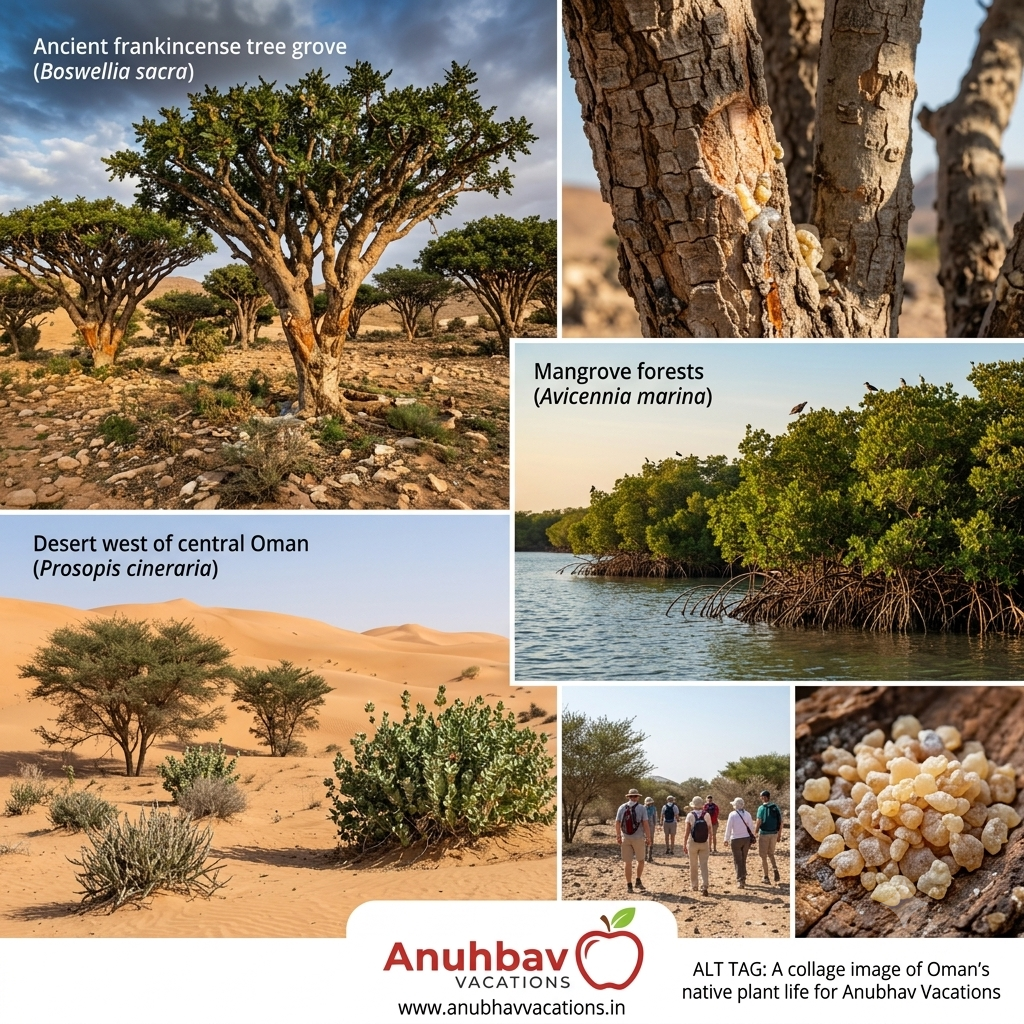
One of the most fascinating plants associated with Oman is the frankincense tree, belonging to the Boswellia genus. These trees are particularly connected with the Dhofar region, where suitable environmental conditions support their growth.
Frankincense is an aromatic resin obtained from certain trees. For centuries, it has played an important role in trade, traditional incense practices, and the cultural heritage of southern Arabia. Its distinctive fragrance remains closely associated with Omani hospitality and everyday traditions.
Travelers exploring Dhofar may learn about frankincense landscapes, traditional harvesting methods, and the importance of sustainable resin collection. Depending on the itinerary, visitors can explore relevant cultural sites, local markets, or landscapes associated with frankincense production.
The experience is especially rewarding when guides explain how the trees grow in challenging environments, including rocky slopes and dry terrain. Visitors can also learn why careful harvesting matters for the long-term health of the trees.
Not every trip will include a frankincense-growing area, so travelers interested in this experience should confirm that Dhofar or another relevant location is included in their itinerary.
3. Exploring Oman's Diverse Plant Habitats
Oman's native vegetation varies considerably across the country. Exploring several regions allows travelers to understand how plants respond to differences in rainfall, soil, temperature, and elevation.
Desert landscapes
Oman's deserts support plants that can withstand intense sunshine, limited rainfall, and high temperatures. Hardy shrubs and other drought-adapted species help stabilize the soil and provide shelter or food for wildlife.
During a guided desert excursion, travelers may notice vegetation around dunes, gravel plains, and seasonal drainage channels. Some plants develop deep root systems, while others have small leaves or other adaptations that reduce water loss.
The exact species visible vary according to the habitat and recent rainfall.
Mountain environments
The Al Hajar Mountains offer a different botanical experience. Elevation, rocky terrain, and localized rainfall create conditions that differ from those of the surrounding lowlands.
Travelers may see shrubs, small trees, seasonal herbs, and flowering plants along suitable walking routes. Mountain villages and terraced agricultural landscapes can also demonstrate how communities cultivate crops in challenging conditions.
Guided walks should follow established routes, particularly where the terrain is steep or fragile.
Wadis and oases
Wadis are valleys or channels that may carry water after rainfall. Some contain pools, shaded sections, and vegetation that benefits from moisture retained in the soil.
Date palms are particularly important in Oman's cultivated oases. Although they are widely cultivated rather than exclusive to Oman, they form an essential part of the country's agricultural landscape.
Depending on the location, travelers may also observe other cultivated trees and plants around settlements, farms, and water channels.
Coastal environments
Oman's coastline supports several types of vegetation adapted to salt, wind, and dry conditions. Mangroves occur in suitable sheltered coastal habitats, where they provide important ecological benefits.
Mangrove ecosystems help support coastal biodiversity, provide habitat for fish and other organisms, and contribute to shoreline stability. A visit to a suitable coastal site can help travelers understand why protecting these habitats matters.
4. What Native Desert Plants Can Travelers Observe?
Desert vegetation offers an excellent introduction to the ways plants survive in harsh environments. In Oman, the appearance of the landscape can change dramatically following rainfall, with some areas becoming greener and producing seasonal flowers.
Visitors may encounter drought-tolerant shrubs, thorny plants, and species with small leaves that help conserve moisture. Some desert plants grow close to the ground, reducing exposure to strong winds and intense sunlight.
Other plants have roots adapted to locate scarce water or survive extended dry periods. These adaptations are particularly interesting for travelers who enjoy learning about ecology and natural history.
A guided desert walk can explain the role of vegetation in maintaining the ecosystem. Plants can help reduce soil erosion, provide food for insects and other wildlife, and create shelter in environments where shade is limited.
Travelers should avoid pulling up plants, breaking branches, or collecting seeds without permission. Some species may be rare, protected, or especially vulnerable to disturbance. Observing plants in their natural habitat is the best way to appreciate their value.
5. Discovering Medicinal and Traditionally Used Plants in Oman
Plants have long been important in Omani daily life, particularly in traditional food preparation, incense practices, household products, and local knowledge of the natural environment.
During cultural excursions, travelers may learn about plants used to produce aromatic resins, natural fragrances, traditional dyes, and other everyday materials. Frankincense is one of the most recognizable examples, while date palms remain central to local agriculture and food traditions.
Some communities also maintain knowledge of herbs and plants traditionally used in home remedies. However, traditional uses should not be confused with scientifically established medical benefits, and wild plants should never be consumed or applied without reliable identification and appropriate professional guidance.
Travelers interested in this subject can visit local markets, museums, or cultural heritage sites where available. Speaking with knowledgeable local guides can provide valuable context about how traditional practices have evolved and how modern conservation efforts protect plant resources.
Such experiences make a nature-focused holiday more educational by connecting botanical discoveries with Oman's cultural identity.
6. The Best Time to Discover Native Plants in Oman
The ideal time for botanical exploration depends on the region and the type of vegetation travelers want to observe.
Khareef season in Dhofar
The khareef season, generally lasting from June to September, brings monsoon moisture to Dhofar. The mountains and plains become greener, and visitors can experience a landscape that contrasts with the arid conditions found elsewhere in Oman.
This period is particularly attractive for travelers interested in lush scenery, seasonal vegetation, mist-covered hills, and flowing watercourses. However, rainfall, mist, and road conditions can affect outdoor excursions.
Winter and spring
From approximately October to March, many parts of Oman offer more comfortable conditions for outdoor sightseeing. Travelers can explore wadis, mountain routes, desert landscapes, and cultivated areas without the intense heat often experienced during summer.
Following favorable rainfall, some locations may display seasonal flowers and fresh vegetation. The timing and abundance of flowering plants vary from year to year.
Planning around your interests
If frankincense trees are your main interest, consider including Dhofar and Salalah in your itinerary. If you prefer mountain vegetation or desert-adapted shrubs, ask about guided walks in suitable northern or central Omani landscapes.
Before departure, check seasonal conditions and confirm whether your preferred nature excursions operate during your travel dates.
7. How Can Travelers Include Botanical Experiences in Their Oman Holiday?
A thoughtfully planned itinerary can combine plant exploration with Oman's well-known cultural and natural attractions.
For example, travelers can explore Muscat's heritage attractions before continuing toward the Al Hajar Mountains for scenic drives and guided nature walks. A visit to Nizwa can introduce travelers to traditional markets and local agricultural products, while a suitable wadi excursion can provide opportunities to observe vegetation growing in relatively moist environments.
Another option is to travel south to Salalah and explore the distinctive landscapes of Dhofar. Depending on the season, visitors may combine frankincense heritage experiences with coastal scenery, mountain viewpoints, and green valleys.
When comparing Oman Vacation Packages, travelers should look beyond the standard sightseeing itinerary and ask whether botanical walks, nature reserves, or visits to frankincense-growing areas can be arranged.
A suitable Oman Group Tour Package may provide shared transportation and guided sightseeing, making it easier to explore several regions within a planned schedule. However, travelers should verify whether specialist nature guides and botanical excursions are included.
Similarly, Oman Group Tours can be a convenient choice for visitors who enjoy learning alongside fellow travelers. A group itinerary may combine nature discovery with historic forts, traditional villages, desert experiences, and local food.
Not every package will include the same locations or activities. Confirm the route, travel distances, guide expertise, and any additional charges before booking.
8. Nature Reserves and Responsible Plant Observation
Oman has protected natural areas that help conserve its distinctive habitats and biodiversity. Visiting an appropriate reserve can offer travelers a better understanding of the relationship between plants, wildlife, and environmental protection.
For example, the Environment Authority identifies the Qurm Nature Reserve in Muscat as a protected mangrove habitat. Mangroves are adapted to coastal conditions and support important ecological relationships involving birds and marine organisms. <Cite refs={["turn117709search3"]}/>
Visitors should check access arrangements and any restrictions before planning a visit. Some protected locations may require permits, guided access, or compliance with special conservation rules.
Responsible plant observation includes several simple practices:
-
Stay on designated trails wherever available.
-
Avoid picking flowers, removing seeds, or damaging branches.
-
Never disturb rare plants or their surrounding habitat.
-
Carry rubbish away and dispose of it appropriately.
-
Follow instructions from local guides and reserve authorities.
-
Avoid driving off designated roads into fragile desert vegetation.
These precautions help preserve natural landscapes for local communities, wildlife, and future visitors.
Oman's varied habitats are valuable not only for tourism but also for maintaining biodiversity. The country's Environment Authority documents a wide range of plant life across desert, mountain, coastal, and fertile environments, highlighting the importance of conservation. <Cite refs={["turn117709search9"]}/>
9. Tips for a Successful Botanical Holiday in Oman
A few practical preparations can make a plant-focused journey more comfortable and rewarding.
Choose comfortable clothing: Lightweight, breathable clothing is useful in warm areas, while a light jacket may be helpful in cooler mountain conditions.
Wear suitable footwear: Walking shoes with good grip are advisable for uneven trails, rocky valleys, and nature walks.
Carry water and sun protection: Bring drinking water, sunscreen, sunglasses, and a hat, particularly when exploring exposed landscapes.
Bring a camera or binoculars: These can help you observe plant details and surrounding wildlife without disturbing the environment.
Ask about local expertise: A naturalist or knowledgeable local guide can help identify species and explain their ecological significance.
Keep expectations flexible: Plant growth and flowering depend on rainfall, temperature, and season. A landscape may look very different from one visit to another.
Respect local customs: When visiting villages, farms, and cultural sites, follow local guidance and ask permission before photographing people or entering private property.
These steps help travelers enjoy Oman's natural beauty while respecting the people and ecosystems that make the country distinctive.
Conclusion
Discovering native plants can add an educational and memorable dimension to an Omani holiday. From the culturally significant frankincense trees of Dhofar to drought-resistant desert shrubs, mountain vegetation, date palms, and coastal mangroves, the country offers a variety of botanical experiences. The best discoveries depend on choosing suitable destinations, traveling during favorable seasonal conditions, and respecting local conservation guidelines. Travelers can combine guided nature walks with cultural attractions, scenic drives, and visits to traditional markets to gain a broader understanding of Oman's natural heritage. For help planning a journey that balances botanical discovery with sightseeing and authentic local experiences, Anubhav Vacations can help travelers explore suitable holiday options based on their interests and preferred travel dates.
Frequently Asked Questions (FAQs)
1. Can travelers discover native plants during an Oman Vacation Package?
Yes, travelers can discover native and locally adapted plants in Oman's deserts, mountains, wadis, coastal habitats, and the Dhofar region. Guided nature walks can help visitors understand their ecological and cultural importance.
2. Which native plant is Oman particularly famous for?
Oman is particularly famous for frankincense trees, especially Boswellia sacra in Dhofar. The aromatic resin has a long history of cultural and commercial importance in the region.
3. When is the best time to explore Oman's plant life?
The best time depends on the destination. Dhofar's khareef season, generally from June to September, brings greener landscapes, while the cooler months are suitable for exploring many other parts of Oman.
4. Can travelers see mangroves during an Oman holiday?
Yes, travelers can visit suitable coastal habitats, including the Qurm Nature Reserve in Muscat, to learn about mangroves and their ecological importance. Access and activities depend on local regulations.
5. Can Oman Vacation Packages include guided botanical experiences?
Yes, travelers can request guided nature walks, frankincense heritage visits, or excursions to suitable natural areas. Oman Vacation Packages vary in their inclusions, so confirm guide availability, destinations, transportation, and additional charges before booking.
 Turkish
 English
 Arabic
 French
 Spanish
 Portuguese
 Deutsch
 Dutch
Dutch
 Italiano
 Russian
 Romaian
 Portuguese (Brazil)
 Greek
Greek
